
The electrical system in a home contains several types of wires. Each one has a different job.
Before explaining an open ground, it helps to understand how electricity normally moves through a home and what electricians mean when they use the word ground.
How Does Electricity Normally Flow?
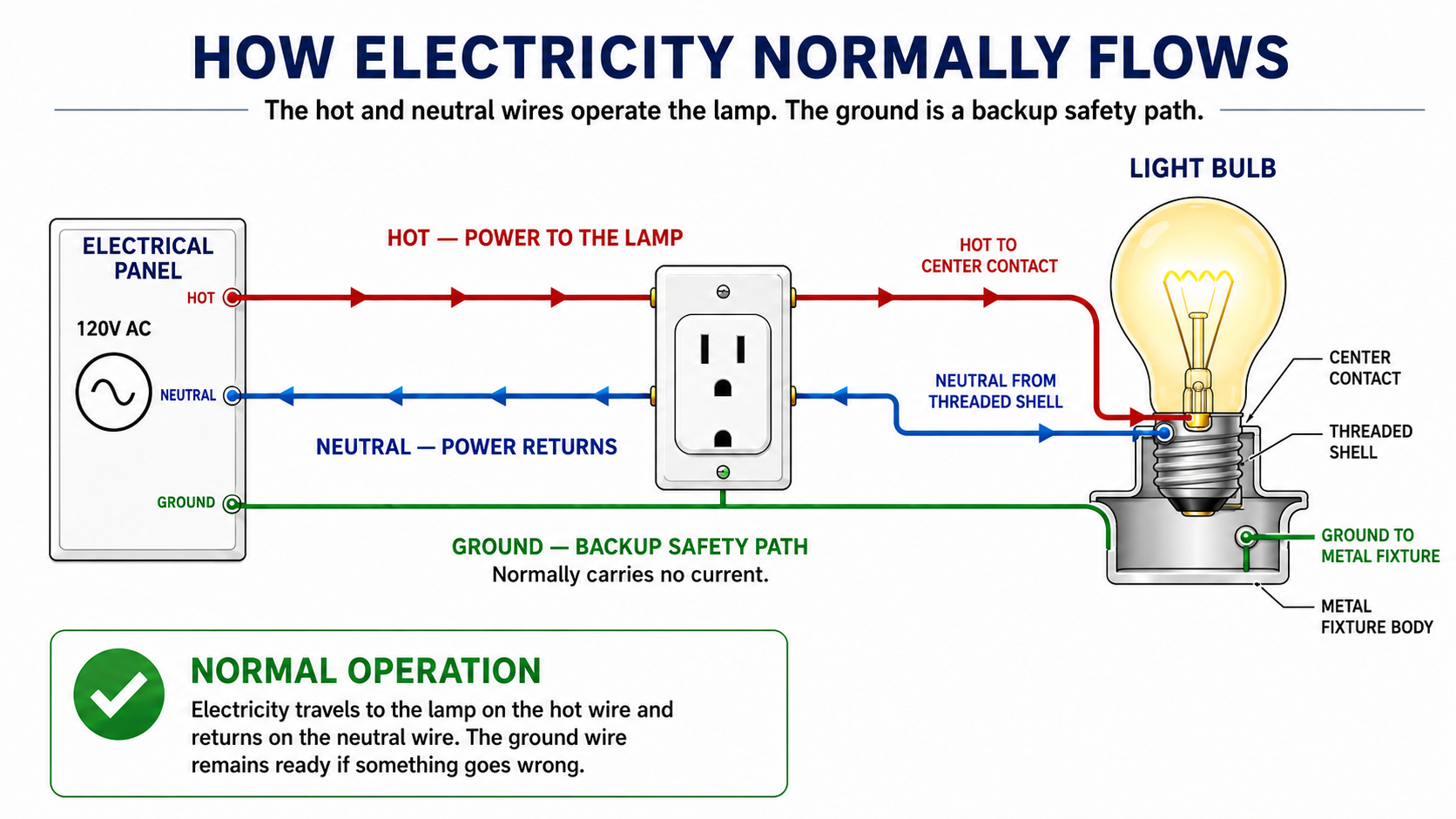
When a lamp, appliance, or other electrical device is turned on, electricity travels in a complete path.
The hot wire carries electricity from the electrical panel to the device. After the device uses the electricity, the neutral wire carries it back to the electrical system.
A simple way to think about it:
- The hot wire brings electricity to the device.
- The neutral wire provides the normal return path.
- The ground wire provides a backup safety path if something goes wrong.
During normal operation, electricity flows through the hot and neutral wires. The ground wire is normally not carrying electricity.
What Does Ground Mean?
When electricians talk about ground, they are usually referring to a safety path built into the electrical system.
Many appliances and electrical devices contain metal parts. Under normal conditions, those metal parts should not be energized.
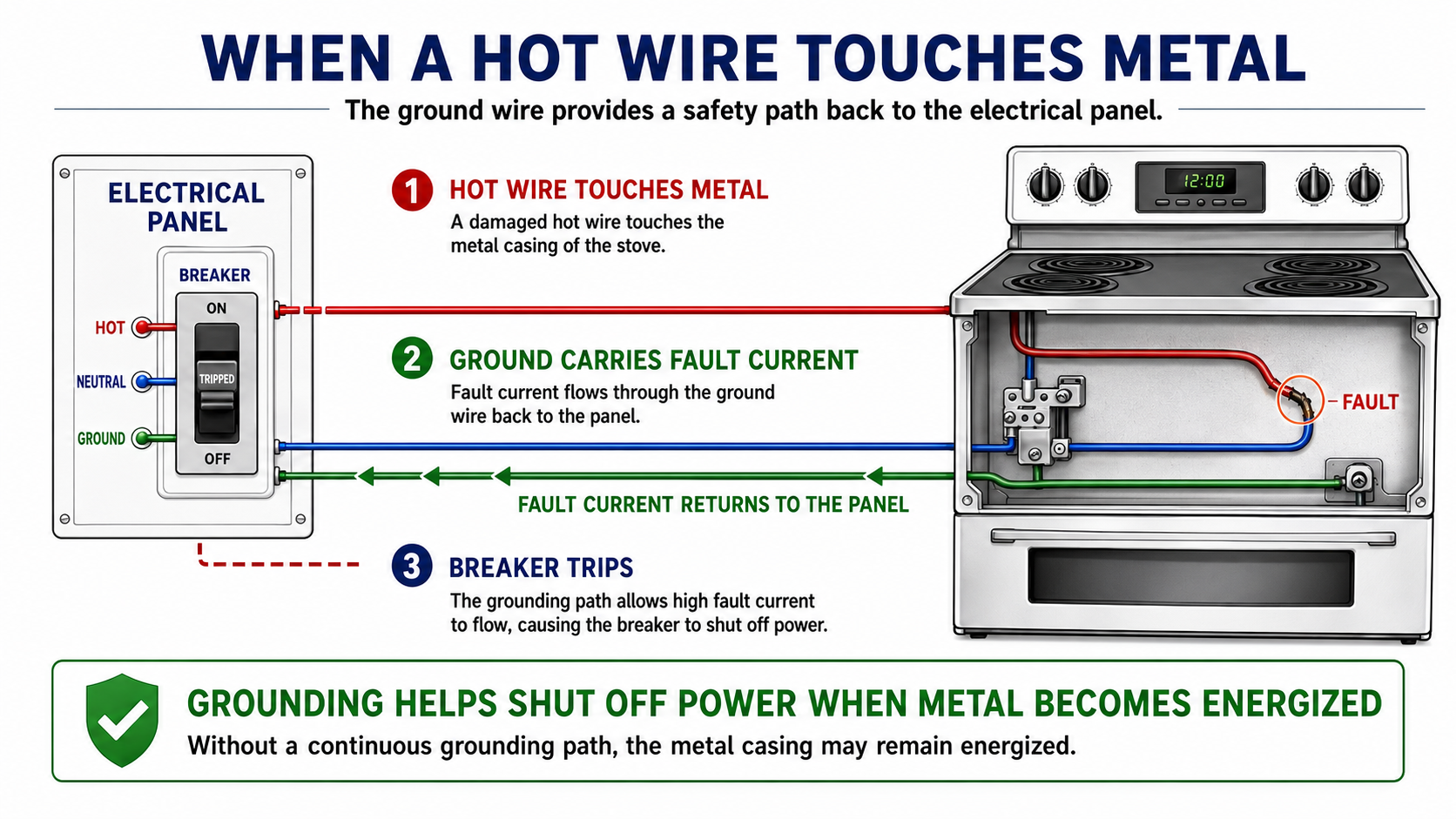
However, imagine that a wire inside an electric stove becomes loose and touches the machine's metal housing. The housing could then become energized. A person touching the machine could receive an electrical shock.
The ground wire provides electricity with a safer path back to the electrical system. This allows the circuit breaker to respond and shut off power.
The ground wire does not prevent the original problem. It helps the electrical system respond when a problem occurs.
Does Ground Mean Electricity Goes Into the Earth?
The word ground can make it sound as though unwanted electricity is simply sent into the soil.
The equipment-grounding system in a home is more than a connection to the earth. It connects receptacles, electrical boxes, appliances, and other metal components back to the home's electrical system.
This creates a continuous safety path that helps a breaker or fuse disconnect power when certain electrical faults occur.
What Is an Open Ground?
An open ground means that the safety path is missing, disconnected, or incomplete.
The receptacle may still provide power because the hot and neutral wires remain connected. A lamp or appliance plugged into it may appear to work normally.
However, the backup grounding path may not be available if an electrical fault occurs.
This is why an open ground can be easy to overlook. The receptacle may work normally until something goes wrong.
Can a Three-Slot Receptacle Have an Open Ground?
Yes. A three-slot receptacle can look grounded even when no functional grounding path is present.
The round opening is designed to receive the grounding prong of a three-prong plug. However, the opening is useful only when it is connected to a complete grounding path.
The appearance of the receptacle alone does not confirm that it is grounded.
Why Are Open Grounds Common in Older Homes?
Many older homes were built before grounding wires became common in residential branch circuits. These homes often have older two-wire wiring and may still contain two-slot receptacles.
In some homes, a two-slot receptacle was later replaced with a three-slot receptacle without adding a grounding path. The newer receptacle accepts a three-prong plug, but that does not necessarily mean it is grounded.
An open ground can also result from:
- A loose grounding connection
- A disconnected grounding wire
- A damaged wire somewhere along the circuit
- Previous electrical alterations or repairs
The cause usually cannot be determined by looking at the front of the receptacle.
Does an Open Ground Mean the Whole House Is Ungrounded?
No. An open ground may affect one receptacle, several receptacles, one circuit, or a larger portion of an older electrical system.
For example, a disconnected ground at one location may affect other receptacles farther along the same circuit. In another home, the concern may be limited to one improperly connected receptacle.
A licensed electrician can determine how much of the electrical system is affected.
Can a GFCI Help?
A ground-fault circuit interrupter, or GFCI, can provide additional protection against electrical shock on an ungrounded circuit.
A GFCI monitors the electricity traveling through the circuit. If it detects that some electricity is leaving the normal path, it quickly shuts off power.
However, a GFCI does not create a ground wire. A GFCI-protected receptacle installed on an ungrounded circuit remains ungrounded and should be identified accordingly.
To learn more, read What Is GFCI Protection?
How Is an Open Ground Corrected?
The appropriate correction depends on the existing wiring and why the grounding path is open.
A licensed electrician may recommend:
- Repairing a loose or disconnected grounding connection
- Restoring an existing grounding path
- Installing new grounded wiring
- Installing GFCI protection with the appropriate identification
- Installing a receptacle that is appropriate for the existing wiring
The presence of an open ground does not automatically mean the entire home must be rewired. The appropriate correction depends on the location, wiring type, condition, and intended use of the receptacle.
What Should a Home Buyer Know?
An open ground is an electrical safety concern, but it should be considered in the context of the home's age and wiring.
The important questions include:
- Is the home wired with older two-wire circuits?
- Is a grounding wire present but disconnected?
- Does the concern affect one receptacle or several?
- Is GFCI protection present where appropriate?
- What correction does a licensed electrician recommend?
An electrician can explain the existing wiring and available options without assuming that complete replacement is necessary.
What Does a Rhode Island Home Inspection Include?
A Rhode Island home inspection is visual and non-invasive. Home Inspect New England tests a representative number of readily accessible receptacles for grounding and polarity and tests a representative sample of GFCI devices.
Testing does not include every receptacle or confirm the adequacy of the home's entire grounding system. Adverse results are reported, and further evaluation by a licensed electrician may be recommended.
The Bottom Line
During normal operation, the hot wire carries electricity to a device and the neutral wire carries it back. The ground wire is a backup safety path that helps the electrical system respond if electricity reaches metal parts that should not be energized.
An open ground means that the safety path is missing or incomplete.
The receptacle may still provide power, and connected equipment may appear to work normally. However, the grounding path may not be available if an electrical fault occurs.
A licensed electrician can determine why the ground is open, how much of the system is affected, and what correction is appropriate.
Home Inspect New England provides visual, non-invasive home inspections consistent with applicable Rhode Island requirements and the inspection agreement. A home inspection is not a code-compliance inspection and does not guarantee that every electrical concern will be identified.
Continue Learning
Interested in learning more about your home's electrical system? Explore these related articles:
- What Is GFCI Protection?
- What Is AFCI Protection?
- What Is a Double-Tapped Breaker?
- Should I Buy a House With Knob-and-Tube Wiring?
- What Does a Home Inspector Look For?
A home inspection is one of the best opportunities to understand a home before you buy it. Home Inspect New England provides thorough, objective home inspections with clear communication and practical recommendations designed to help you make informed decisions with confidence.
Know Your Home Before You Buy.