
A Ground Fault Circuit Interrupter (GFCI) is an electrical safety device designed to help protect people from electrical shock.
GFCI protection may be provided by a GFCI receptacle, commonly found in kitchens, bathrooms, garages, and other locations, or by a GFCI circuit breaker installed in the home's electrical panel. Both types perform the same basic function.
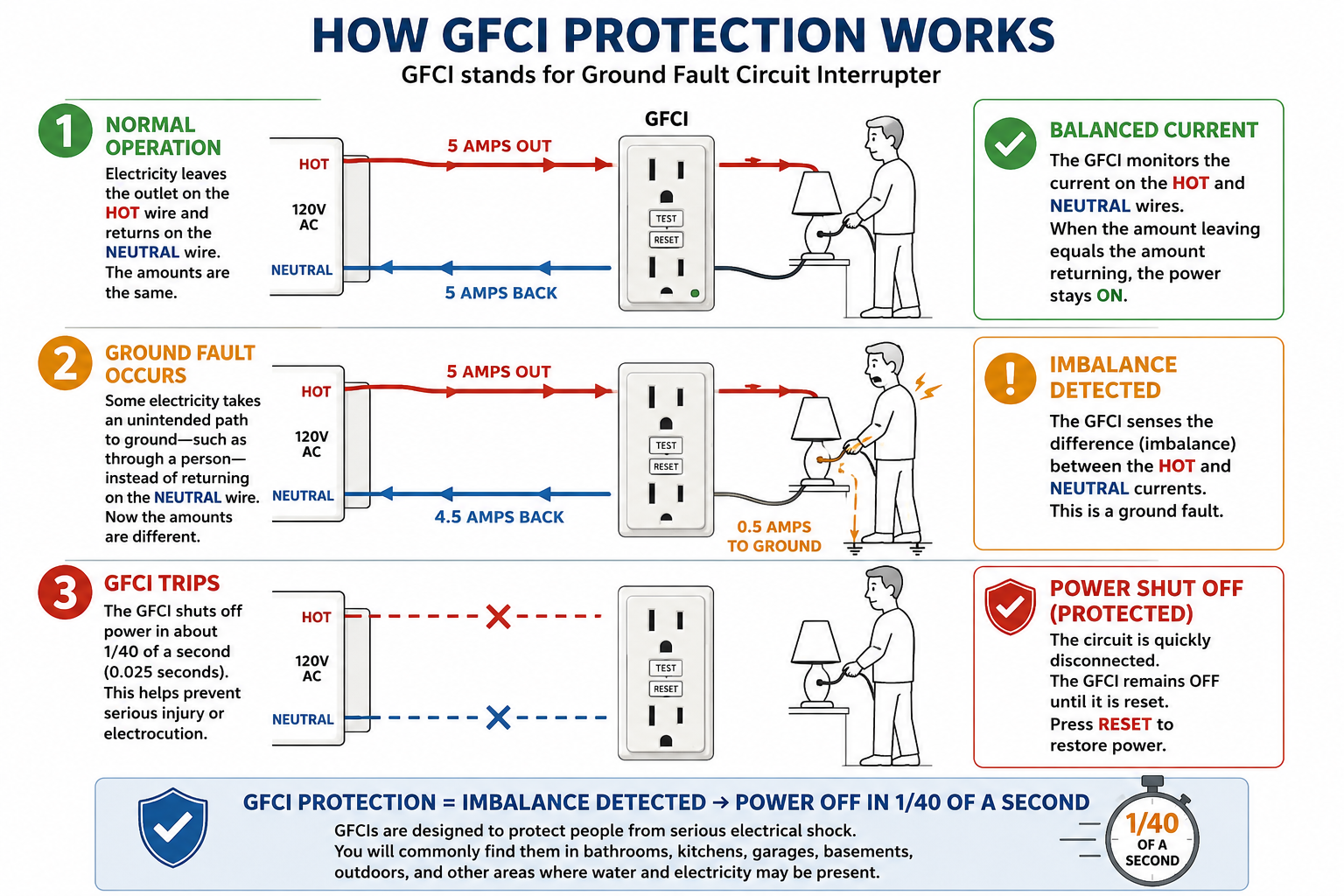
Whether installed as a receptacle or a circuit breaker, a GFCI continuously compares the current leaving the device with the current returning. If it detects an imbalance in current, such as electricity flowing through an unintended path, it disconnects power in a fraction of a second to help reduce the risk of serious electrical shock.
How Does a GFCI Work?
Under normal conditions, electricity leaves the receptacle on the hot wire and returns on the neutral wire.
A GFCI continuously compares the current leaving the device with the current returning. If even a very small imbalance is detected, the GFCI disconnects power almost instantly.
This process happens in a fraction of a second and is designed to help protect people, not electrical equipment.
Where Are GFCIs Commonly Installed?
Depending on the age of the home and whether electrical upgrades have been performed, GFCI protection may be found in locations such as:
- Bathrooms
- Kitchens
- Garage receptacles
- Exterior receptacles
- Unfinished basements
- Crawlspaces
- Laundry areas
- Utility sinks
- Wet bar locations
Over time, electrical safety requirements have expanded the locations where GFCI protection is commonly installed. As a result, newer homes often have more GFCI-protected receptacles than older homes.
How Can You Identify a GFCI?
Most GFCI receptacles are easy to recognize. They typically include two buttons labeled TEST and RESET.
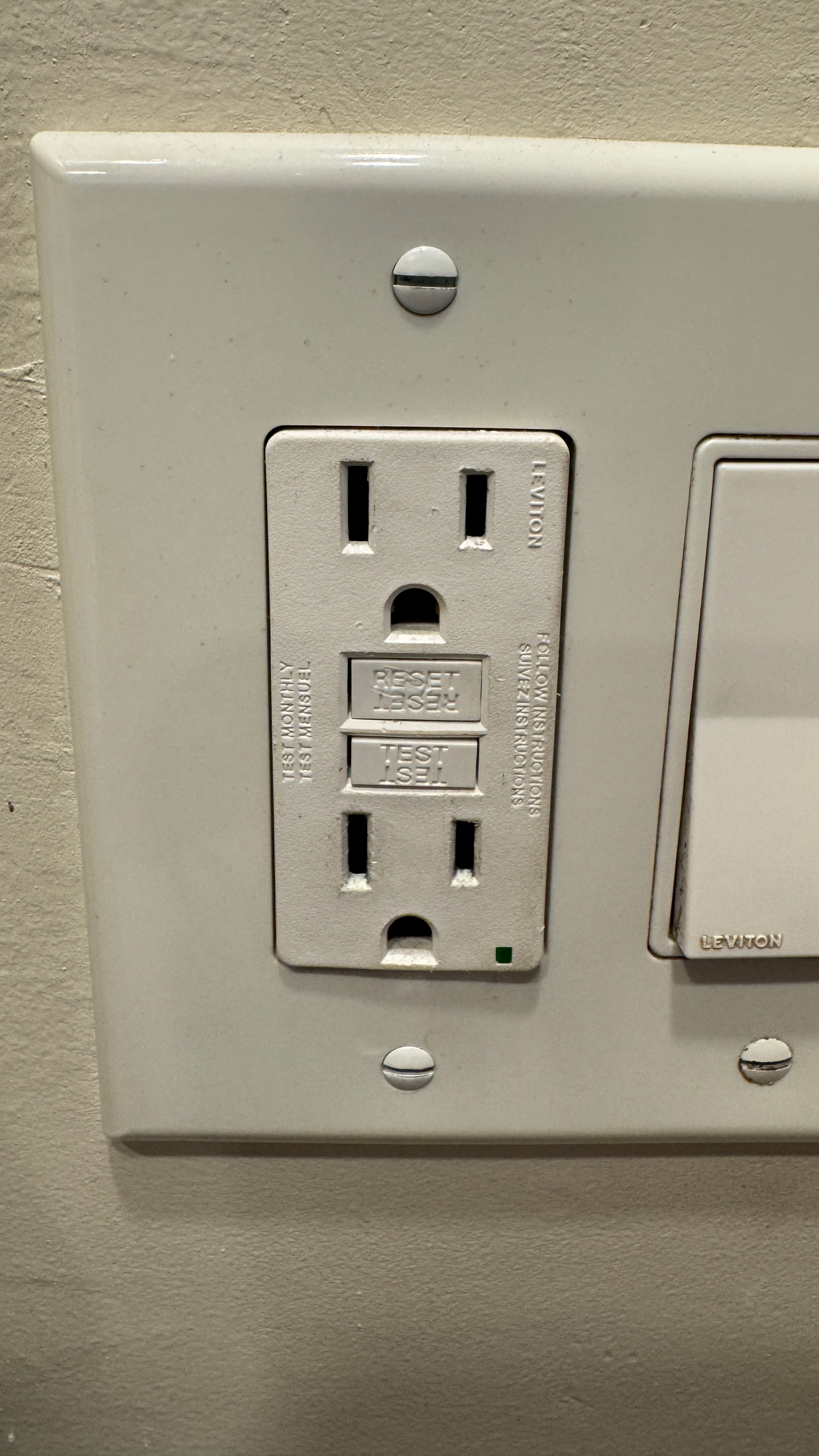
Some homes use GFCI circuit breakers in the electrical panel instead of GFCI receptacles. In those cases, individual outlets may not have TEST and RESET buttons but are still protected by the breaker.
Why Is GFCI Protection Important?
Electricity naturally seeks a path back to its source. If that path happens to be through a person, the result can be serious injury.
Because the risk of electrical shock increases where electricity and moisture may be present, GFCI protection is especially important in kitchens, bathrooms, garages, exterior locations, and other damp or wet environments.
While no safety device eliminates all risk, GFCIs have significantly improved electrical safety in homes.
What If a GFCI Won't Reset?
If a GFCI device won't reset, several possibilities exist. For example:
- The device may have failed
- A downstream receptacle or appliance may have a fault
- Moisture may be present
- A wiring problem may exist
If a GFCI repeatedly trips or cannot be reset, further evaluation by a qualified electrician is recommended.
Should GFCIs Be Tested?
Yes.
Manufacturers generally recommend periodically testing GFCI devices using the built-in TEST and RESET buttons.
- Pressing the TEST button should interrupt power
- Pressing RESET should restore power
If the device does not operate as expected, it should be evaluated by a qualified electrician. Always follow the manufacturer's instructions when testing electrical safety devices.
Common Misconceptions
"A GFCI prevents electrical shocks."
Not exactly. A GFCI helps reduce the risk of serious electrical shock by disconnecting power very quickly when it detects an imbalance in electrical current.
"Only bathrooms need GFCIs."
No. Modern homes commonly have GFCI protection in many areas where water or moisture may be present.
"A regular breaker provides the same protection."
No. A standard circuit breaker is designed primarily to protect wiring from overloads and short circuits. A GFCI is specifically designed to help protect people from ground-fault electrical shock.
Our Approach
At Home Inspect New England, we visually inspect readily accessible electrical components as part of the home inspection.
During the inspection, any observations involving GFCI protection will be documented in the inspection report along with recommendations when appropriate. Electrical safety devices play an important role in protecting occupants, and understanding how they work is an important part of understanding your home.
Frequently Asked Questions
Is it normal for a GFCI to trip?
Occasionally, yes. A GFCI may trip if it detects a ground fault or if moisture or a faulty appliance creates an electrical imbalance. Repeated or unexplained tripping should be evaluated by a qualified electrician.
Can one GFCI protect multiple outlets?
Yes. A single GFCI receptacle may protect additional downstream receptacles on the same circuit. Likewise, a GFCI circuit breaker can provide GFCI protection to every receptacle and device connected to that branch circuit.
Do older homes always have GFCI protection?
Not necessarily. Electrical safety requirements have expanded over time. Many older homes have had GFCI protection added during renovations, while others may have fewer protected locations than newer homes.
Inspector's Perspective: GFCIs are one of the most important electrical safety improvements found in modern homes. Although they're simple devices, they provide valuable protection in areas where electricity and water may come together. During a home inspection, I identify the locations where GFCI protection is present, explain how it works, and document any observations that may deserve additional attention.
Schedule Your Home Inspection
A home inspection is one of the best opportunities to understand a home before you buy it.
Home Inspect New England provides thorough, objective home inspections with clear communication and practical recommendations designed to help you make informed decisions with confidence.