
An Arc Fault Circuit Interrupter (AFCI) is an electrical safety device designed to help reduce the risk of electrical fires caused by dangerous arcing conditions in household wiring.
AFCI protection is most commonly provided by:
- An AFCI circuit breaker installed in the home's electrical panel.
- An AFCI receptacle installed as the first device on a branch circuit.
Although AFCI circuit breakers are far more common in residential construction, AFCI receptacles perform the same basic safety function by monitoring for hazardous electrical arcing.
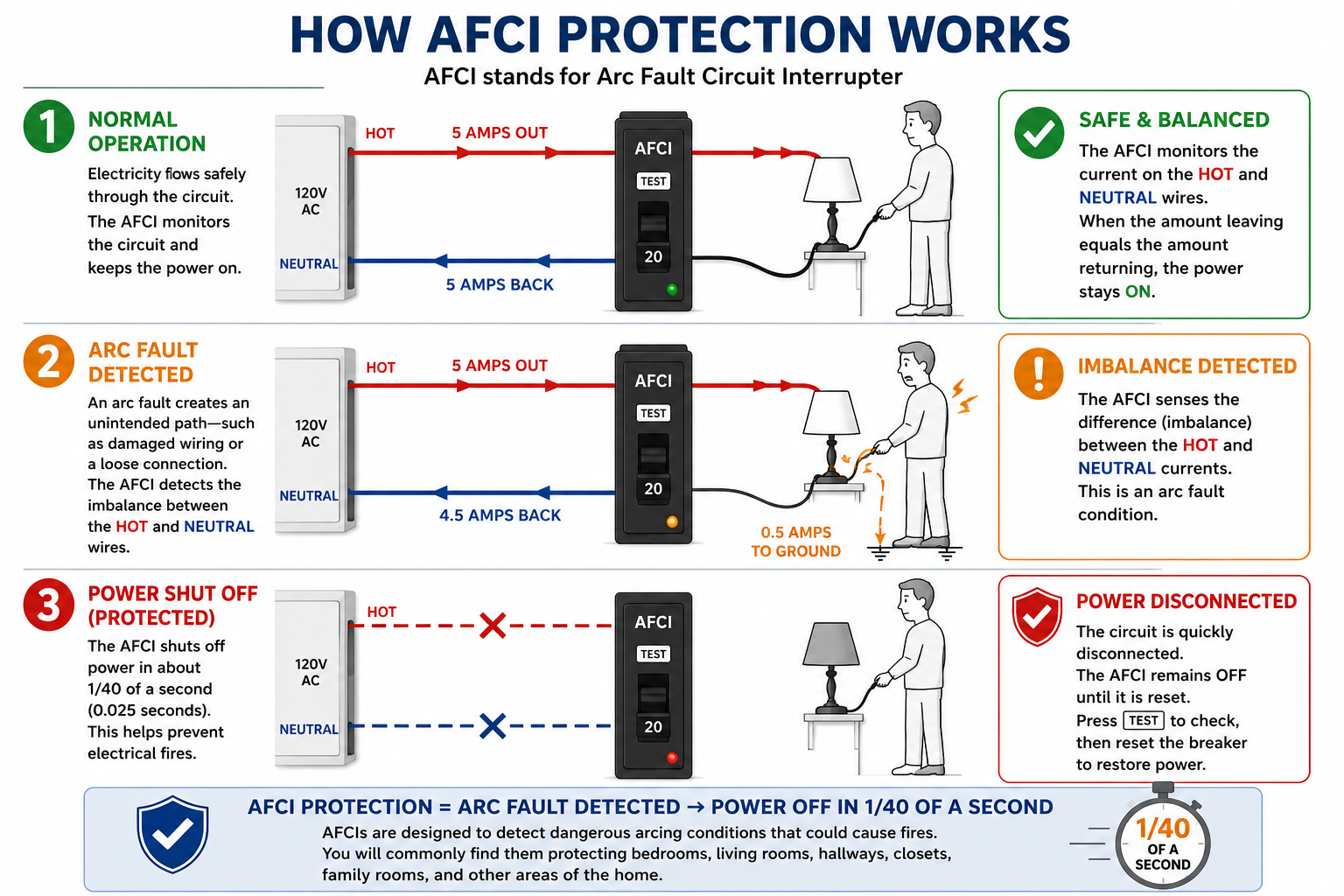
Unlike a standard circuit breaker, which primarily protects wiring from overloads and short circuits, an AFCI is designed to recognize electrical arcing that could ignite surrounding combustible materials.
What Is Electrical Arcing?
Electrical arcing occurs when electricity jumps through the air between conductors or across damaged electrical connections.
Small arcs can occur during normal operation of certain switches or appliances. AFCIs are designed to distinguish between normal electrical arcing and the unique patterns associated with potentially hazardous arc faults.
Unintended arcing caused by damaged wiring, loose electrical connections, or deteriorated insulation can generate extremely high temperatures capable of igniting nearby combustible materials.
An AFCI continuously monitors the electrical waveform and disconnects power when it detects arcing characteristics associated with potentially hazardous conditions.
What Can Cause Arc Faults?
Common causes include:
- Damaged electrical cords
- Loose electrical connections
- Nails or screws penetrating wiring inside walls
- Worn insulation
- Damaged receptacles or switches
- Pinched electrical wiring
- Aging electrical components
Not every arc fault presents an immediate fire hazard, but AFCIs are designed to recognize patterns associated with potentially dangerous conditions.
Where Are AFCIs Commonly Installed?
Depending on when the home was built and the electrical code in effect at the time of construction, AFCI protection may be present on only a few circuits or throughout much of the home.
AFCI protection may be found protecting circuits serving areas such as:
- Bedrooms
- Living rooms
- Family rooms
- Dining rooms
- Hallways
- Closets
- Laundry areas
- Finished basements
- Kitchens (many circuits)
Over time, electrical safety requirements have expanded the locations where AFCI protection is commonly installed. As a result, newer homes often have significantly more AFCI-protected circuits than older homes.
How Can You Identify an AFCI?
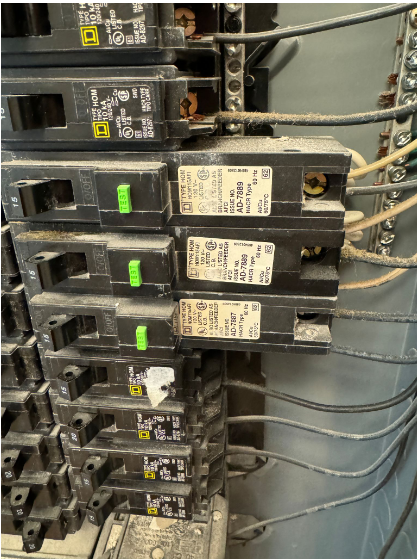
Most AFCI devices are located in the home's electrical panel as specially designed circuit breakers. Many include a TEST button on the front of the breaker.
Some homes may instead use AFCI receptacles installed at the beginning of a branch circuit.
Unlike GFCIs, AFCIs generally are not found throughout the home as easily recognizable receptacles.
Some manufacturers use different colors or styles of TEST buttons, so the appearance of an AFCI breaker may vary depending on the brand.
Why Is AFCI Protection Important?
Some residential electrical fires originate inside walls where damaged wiring or loose electrical connections cannot easily be seen.
Because these conditions may not create enough current to trip a standard circuit breaker, an arc fault can continue long enough to overheat surrounding materials.
AFCIs provide an additional layer of protection by recognizing hazardous electrical arcing and disconnecting power before it can develop into a fire.
While no electrical safety device eliminates all risk, AFCIs have become an important advancement in residential electrical safety.
What If an AFCI Trips?
If an AFCI trips, several possibilities exist:
- A damaged appliance may be connected.
- A wiring problem may exist.
- A loose electrical connection may be present.
- A nuisance trip may occur under certain conditions.
If an AFCI repeatedly trips without an obvious cause, further evaluation by a qualified electrician is recommended.
Should AFCIs Be Tested?
Yes. Manufacturers generally recommend periodically testing AFCI devices using the built-in TEST button.
If the breaker or receptacle does not respond as expected, it should be evaluated by a qualified electrician. Always follow the manufacturer's testing instructions.
Common Misconceptions
"AFCIs replace GFCIs."
No. These devices protect against different hazards. AFCIs help reduce the risk of electrical fires caused by hazardous arcing. GFCIs help reduce the risk of electrical shock caused by ground faults. Many modern electrical systems incorporate both forms of protection. For more on GFCI protection, see What Is GFCI Protection?.
"Older homes are unsafe because they don't have AFCIs."
Not necessarily. Electrical safety requirements have changed significantly over time. Many older homes were built before AFCIs were required. During renovations, AFCI protection is often added where applicable.
"A standard breaker provides the same protection."
No. Standard breakers primarily protect against overloads and short circuits. AFCIs are specifically designed to recognize hazardous electrical arcing that may not trip a conventional breaker.
Our Approach
At Home Inspect New England, we visually inspect readily accessible electrical components as part of the home inspection. When readily observable, the presence or absence of AFCI protection is documented in the inspection report along with any observations that may warrant additional evaluation.
Understanding the home's electrical safety features helps buyers better understand both the home's design and its overall level of electrical protection.
Frequently Asked Questions
Is it normal for an AFCI breaker to trip occasionally?
Occasionally, yes. Some appliances or damaged electrical components may create arcing conditions that cause an AFCI to trip. Repeated tripping should be evaluated.
Can one AFCI breaker protect multiple outlets?
Yes. An AFCI circuit breaker protects the entire branch circuit connected to it.
Do all homes have AFCI protection?
No. Many older homes were built before AFCI requirements were introduced. Newer homes typically include AFCI protection on many branch circuits.
Inspector's Perspective
During a home inspection, I document the presence of AFCI protection when it is readily observable. While many buyers have never heard of AFCIs before their inspection, understanding whether this protection is present helps provide a more complete picture of the home's electrical system.
Homeowner Tip
If an AFCI breaker trips repeatedly, avoid repeatedly resetting it without determining the cause. Frequent tripping may indicate a damaged appliance, loose wiring, or another electrical issue that deserves further evaluation before the circuit is returned to service.
Continue Learning
Interested in learning more about your home's electrical system? Explore these related articles:
- What Is GFCI Protection?
- What Does a Home Inspector Look For?
- What Does a Home Inspection Not Cover?
A home inspection is one of the best opportunities to understand a home before you buy it. Home Inspect New England provides thorough, objective home inspections with clear communication and practical recommendations designed to help you make informed decisions with confidence.
Know Your Home Before You Buy.