Smoke and carbon monoxide alarms are important safety devices, but their inspection during a Rhode Island real estate transaction is handled separately from the buyer's home inspection.
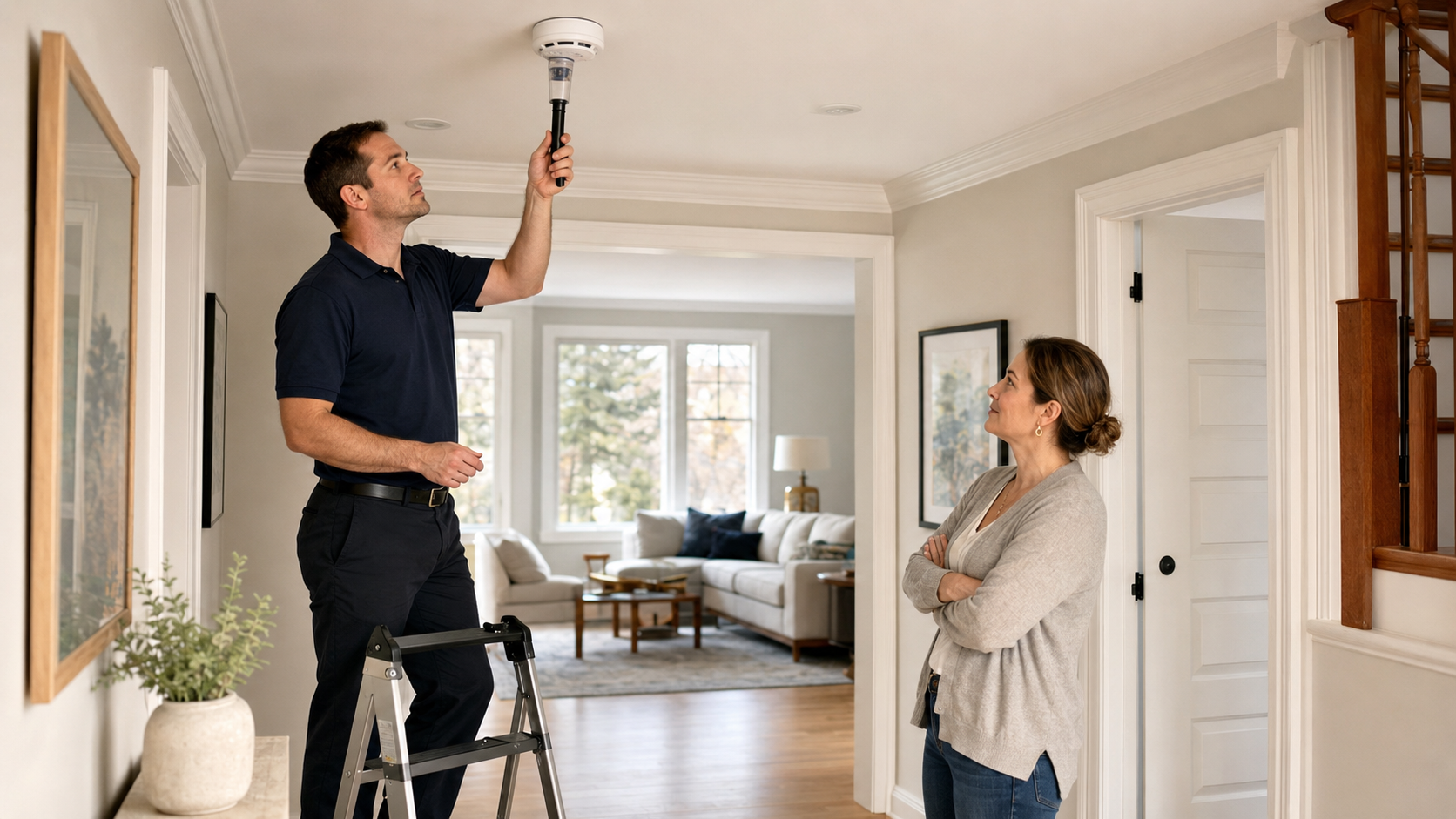
Rhode Island generally requires the seller to provide the buyer with a certificate confirming that the property's smoke and carbon monoxide alarms were inspected and determined to be in working order. The inspection is performed by the local fire department or, in certain circumstances, the Rhode Island Office of the State Fire Marshal.
What Is the Smoke and Carbon Monoxide Certificate?
Before title is transferred, the seller generally must provide the buyer with a certificate stating that the property's smoke and carbon monoxide alarms were inspected within 120 days before the sale and determined to be in good working order.
The certificate documents the result of the required alarm inspection. It does not replace the buyer's general home inspection, and the general home inspection does not replace this certification.
Certain transfers may qualify for an exemption. The requirements for a particular transaction should be confirmed with the appropriate fire authority or closing professional.
Who Performs the Inspection?
The inspection is performed by qualified personnel from the fire department serving the community where the property is located. The Rhode Island Office of the State Fire Marshal may also conduct the inspection when appropriate under state requirements.
This is a fire-safety inspection. It is not performed by the buyer's home inspector.
Who Arranges the Inspection?
The seller is generally responsible for arranging the inspection, paying the applicable inspection fee, and providing the completed certificate to the buyer before title is transferred.
Sellers should contact the local fire department early in the transaction. Waiting until shortly before closing can create unnecessary pressure if an appointment is unavailable or corrections are needed.

What Will the Fire Authority Review?
The fire authority determines whether the required alarms are present, properly located, appropriately installed, and in working order for the property. Requirements can depend on factors such as:
- The municipality and responsible fire authority
- The age and construction date of the home
- The type of dwelling and occupancy
- The number and location of alarms
- Whether alarms must be hardwired or interconnected
- Whether separate or combination alarms are installed
- Previous renovations or changes to the property
Because the requirements are property-specific, sellers should confirm them with the fire authority before purchasing or installing replacement alarms.
Is This Part of the Buyer's Home Inspection?
No. The required smoke and carbon monoxide alarm certification is a separate fire-safety inspection.
Home Inspect New England does not inspect, test, evaluate, or report on smoke or carbon monoxide alarms. Questions about alarm type, placement, operation, wiring, interconnection, or certification should be directed to the local fire department or the Rhode Island Office of the State Fire Marshal.
What Should Sellers Do?
Sellers should contact the appropriate local fire authority early and ask:
- Which alarms are required for the property?
- Where must the alarms be installed?
- Must the alarms be hardwired or interconnected?
- Are combination smoke and carbon monoxide alarms permitted?
- How is the inspection scheduled?
- What fees apply?
- What happens if corrections or a reinspection are needed?
Requirements should be confirmed before buying or installing replacement alarms. Installing the wrong type or placing alarms incorrectly may result in a failed inspection and the need for reinspection.
What Should Buyers Do?
Buyers should confirm that the required certificate will be provided before closing. Their real estate agent or closing attorney can help determine who is coordinating the process and whether the transaction may qualify for an exemption.
After purchasing the home, the new owner becomes responsible for maintaining the alarms and following the manufacturer's testing and replacement instructions.
What Happens If Corrections Are Needed?
If the property does not meet the applicable requirements, the seller may need to correct the alarm type, location, wiring, interconnection, or another condition identified by the fire authority. A reinspection may then be required before the certificate is issued.
The fire authority should be consulted about the exact correction needed. Electrical work should be performed by an appropriately licensed professional when required.
The Bottom Line
Rhode Island's smoke and carbon monoxide alarm certification is separate from the buyer's home inspection. The seller generally arranges the required inspection through the local fire department or the Office of the State Fire Marshal and provides the resulting certificate before title is transferred.
Buyers and sellers should address this requirement early to reduce the possibility of delays before closing.
Continue Learning
- What Happens After the Home Inspection?
- What Does a Home Inspection Not Cover?
- Should I Attend the Home Inspection?
- Understanding Your Home Inspection Report
A home inspection is one of the best opportunities to understand a home before you buy it. Home Inspect New England provides thorough, objective home inspections with clear communication and practical recommendations designed to help you make informed decisions with confidence.
Know Your Home Before You Buy.