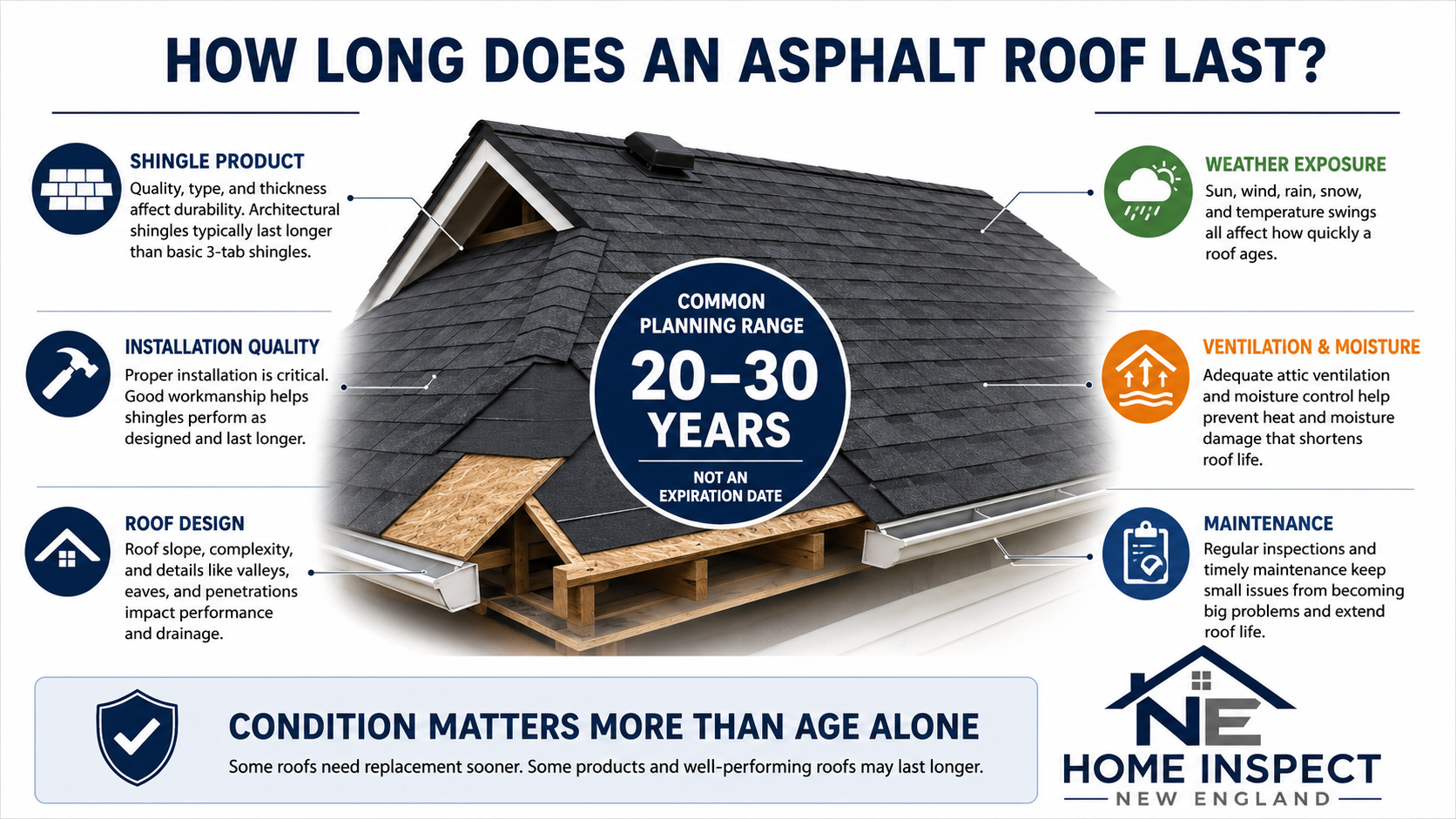
Many asphalt shingle roofs provide roughly 20 to 30 years of service. That range is useful for planning, but it is not an expiration date or a guarantee.
Two roofs installed in the same year can age very differently. The shingle product, installation quality, roof design, weather exposure, ventilation and moisture conditions, flashing, drainage, and maintenance all affect performance.
What Is an Asphalt Shingle Roof?
Asphalt shingles are the most common steep-slope roofing material on many homes. The roof system also includes the roof deck, underlayment, flashings, roof-edge details, penetrations, ventilation components, and drainage.
The shingles are the visible water-shedding surface, but they do not work alone. A roof can leak because of a flashing, penetration, drainage, or installation problem even when much of the shingle field still looks serviceable.
What Is a Reasonable Planning Range?
A broad 20-to-30-year range is a practical starting point for many asphalt shingle roofs. Basic products may reach the lower part of that range, while some architectural or premium products may perform longer under favorable conditions.
The actual roof should be evaluated by its condition, not by a calendar alone. A newer roof can require early repair or replacement after poor installation or storm damage. An older roof may remain serviceable if it was well installed and has aged evenly.
What Can Shorten the Life of an Asphalt Roof?
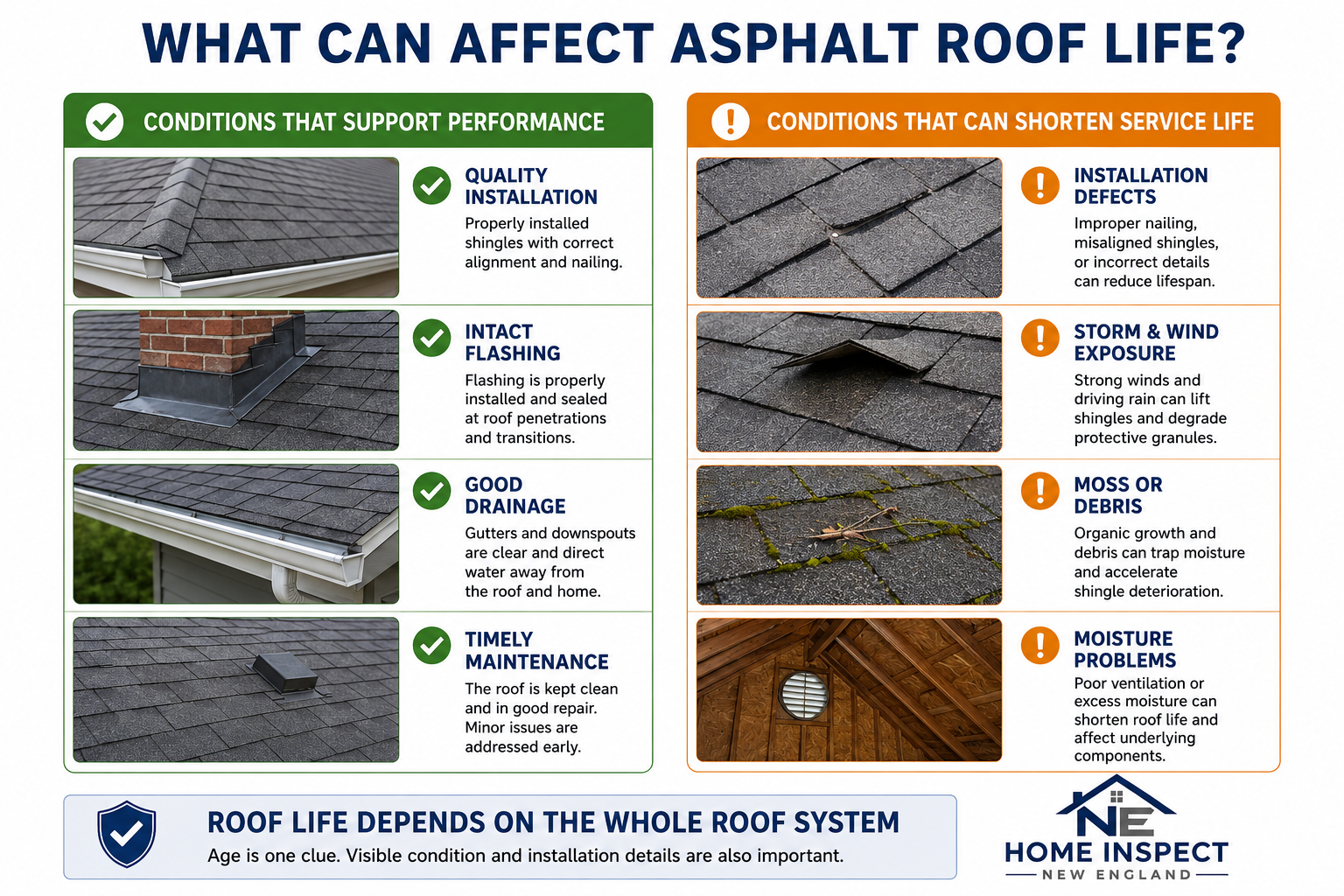
Conditions that can shorten service life include:
- Improper fastening, alignment, or flashing details
- Repeated wind, hail, rain, snow, ice, and freeze-thaw exposure
- Poor drainage or clogged gutters that keep roof edges wet
- Moss, debris, or branches that hold moisture against the shingles
- Excess heat or moisture within the roof and attic assembly
- Foot traffic, careless repairs, or aggressive cleaning
- A complex roof with many valleys, sidewalls, dormers, skylights, or penetrations
Power washing can damage asphalt shingles by dislodging protective granules. Cleaning and maintenance methods should follow the shingle manufacturer's guidance.
What Conditions Support Better Performance?
Quality materials, proper installation, correctly layered flashing, adequate drainage, a sound roof and attic assembly, and timely maintenance all support roof performance.
Prompt repair of a damaged shingle, loose flashing, deteriorated vent boot, or drainage problem may prevent a small condition from affecting a larger area. Maintenance cannot reverse normal aging, but it can reduce avoidable damage.
What Are Common Signs of an Aging Roof?
Visible signs may include:
- Widespread granule loss
- Curling, cracking, lifting, or missing shingles
- Exposed or backed-out fasteners
- Deteriorated ridge caps
- Brittle or damaged shingles around penetrations
- Corroded, loose, or heavily repaired flashing
- Repeated repairs or mismatched shingle areas
- Leak staining in the attic or interior
One isolated defect does not always mean the entire roof needs replacement. Widespread aging, repeated leakage, brittle materials, or numerous failing details may make replacement more practical than continuing repairs.
Does the Warranty Tell Me How Long the Roof Will Last?
Not exactly. A manufacturer's warranty describes specific coverage and conditions. It is not a promise that the roof will remain leak-free or avoid replacement for the full stated warranty period.
Coverage can depend on the product, registration, installation, contractor requirements, maintenance, transfer provisions, exclusions, and the cause of a problem. Request the actual warranty documents and installation records rather than relying on a label such as 30-year or lifetime shingle.
Can a Home Inspector Tell Me Exactly How Many Years Are Left?
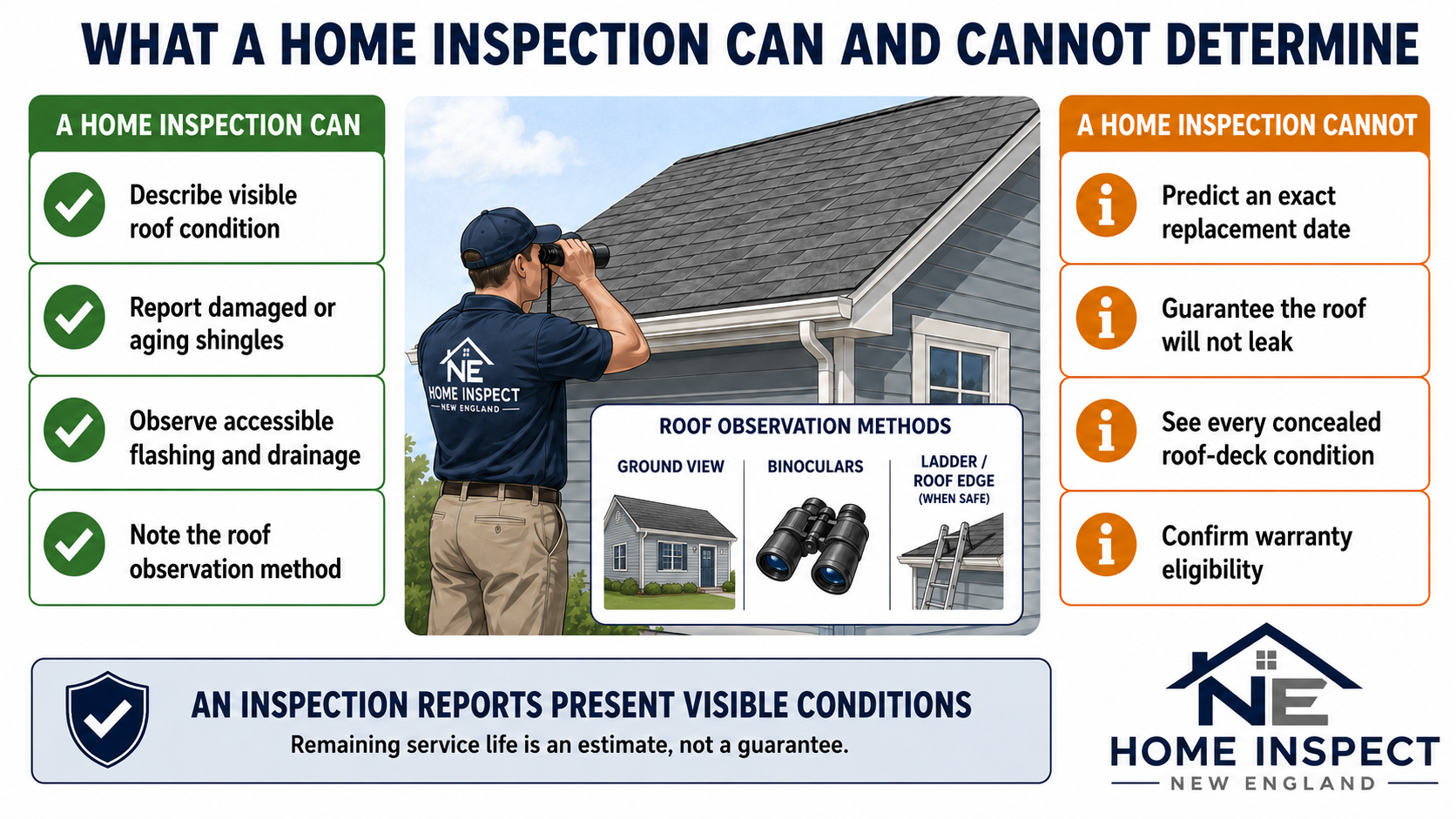
No. A home inspector can describe readily visible roof conditions, signs of aging or damage, accessible flashing and drainage details, and evidence of leakage that is visible at the time of inspection.
Remaining service life is an estimate. The inspection cannot predict the next storm, guarantee that a roof will not leak, see every concealed roof-deck condition, or confirm manufacturer warranty eligibility.
What Should I Ask Before Buying?
- When was the roof installed?
- Is the date supported by a permit, invoice, or warranty document?
- Was the roof fully replaced or installed over an older layer?
- Who performed the work?
- Have there been leaks, storm claims, or repairs?
- Is the warranty transferable?
- Are estimates available for visible repairs or replacement?
If the roof is near the end of its expected range or has widespread visible aging, obtain a roofing contractor's evaluation and written estimate before important purchase deadlines.
Rhode Island Home Inspection Note
A Rhode Island home inspection includes observation of readily accessible roof coverings, exposed roof drainage systems, flashings, skylights, chimneys, and roof penetrations. The report identifies the roof-covering material, describes the observation method, and notes visible signs of active or previous leakage when present.
The inspector is not required to walk on a roof when doing so may damage the roof or place the inspector at risk. The inspection does not determine an exact remaining service life, guarantee a leak-free roof, or reveal every concealed condition beneath shingles, underlayment, flashing, or the roof deck.
The Bottom Line
Many asphalt shingle roofs provide about 20 to 30 years of service, but actual performance varies. Treat age as a planning clue, then consider visible condition, installation details, weather exposure, flashing, drainage, and maintenance.
If a roof is older, shows widespread aging, or has a history of leakage, obtain a qualified roofing evaluation and written estimate. That information is more useful than relying on age or warranty language alone.
Home Inspect New England provides visual, non-invasive home inspections consistent with applicable Rhode Island requirements and the inspection agreement. A home inspection is not a code-compliance inspection and does not guarantee that every roof condition will be identified.
Continue Learning
Interested in learning more about your home's roof? Explore these related articles in the Learning Center as they become available:
A home inspection is one of the best opportunities to understand a home before you buy it. Home Inspect New England provides thorough, objective home inspections with clear communication and practical recommendations designed to help you make informed decisions with confidence.
Know Your Home Before You Buy.